
Adu-Boahene trial: Judge rejects Atta Akyea’s bid for adjournment, orders cross-examination to continue

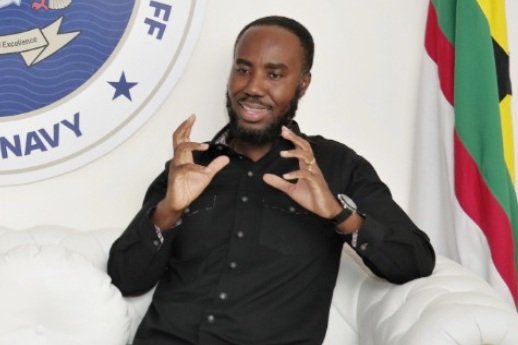
The High Court in Accra has rejected a request by lead counsel for former National Signals Bureau (NSB) Director-General Kwabena Adu-Boahene to suspend proceedings pending the outcome of a Supreme Court review application filed by Ofoase-Ayirebi MP Kojo Oppong Nkrumah.
The court consequently directed lead counsel Samuel Atta Akyea to continue his cross-examination of the prosecution’s fourth witness in the ongoing criminal trial involving Adu-Boahene, his wife Angela Adjei-Boateng and two others.
At Tuesday’s sitting, August 25, Mr Atta Akyea urged the court to hold proceedings and await the Supreme Court’s determination of Mr Oppong Nkrumah’s review application concerning the conduct of criminal trials during the legal vacation.
However, the trial judge, Justice Francis Apangabuno Achibonga, rejected the request and directed the defence to proceed with its cross-examination.
Following the ruling, Mr Atta Akyea pleaded with the court to adjourn proceedings for the day to enable him to return home and prepare to continue the cross-examination.
The lawyer told the court that he had attended Tuesday’s proceedings without preparing to conduct the cross-examination because he had anticipated that his application to halt proceedings would be granted.
“My Lord, I didn’t come today prepared, and even I didn’t bring my files.”
Justice Achibonga declined the request, stressing that lawyers appearing before a court must be prepared for proceedings irrespective of the outcome they anticipate from applications placed before the court.
The judge observed that Mr Atta Akyea’s table was empty but maintained that this was not a sufficient basis to adjourn the proceedings.
“Yes, I can see your table is empty, but I can’t grant you the request. You can just say you have ended the cross-examination and I will adjourn.”
Mr Atta Akyea subsequently continued his cross-examination.
Earlier adjournment
Tuesday’s development follows an earlier decision by the same court on August 17 to adjourn the trial to August 25 while awaiting the determination of an interlocutory injunction application then pending before the Supreme Court.
At the time, Justice Achibonga held that although the mere filing of an application does not ordinarily operate as a stay, the nature of the Supreme Court application — which specifically sought to restrain the High Court from sitting during the legal vacation — warranted awaiting its determination.
That injunction application was subsequently dismissed on August 21 by Supreme Court Justice Gabriel Scott Pwamang, sitting as a single judge. Mr Oppong Nkrumah has since returned to the Supreme Court seeking a review of that decision.
The defence’s latest request was for the High Court to similarly await the outcome of that review before proceeding with the substantive trial.
Cross-examination enters another phase
The dispute over the vacation sitting has interrupted an already lengthy cross-examination of Economic and Organised Crime Office (EOCO) investigator Frank Marshall Cromwell, the fourth prosecution witness.
During an earlier cross-examination on July 27, Mr Cromwell maintained that the GH¢49.1 million at the centre of the prosecution’s case came from a public account operated by the then Bureau of National Communications.
Mr Atta Akyea challenged that characterisation, arguing that the account was established on the instructions of the National Security Coordinator for operational purposes and questioning whether investigators sufficiently considered the special operational practices of national security institutions.
Mr Cromwell acknowledged that the National Security Coordinator authorised the opening of the account at Fidelity Bank for operational purposes but maintained that investigations established that it was among accounts operated by the Bureau.
The defence also questioned the investigator over the scope of EOCO’s investigations. During an earlier sitting, Mr Cromwell acknowledged that there was no identifiable complainant whose formal complaint triggered the investigation and that he had not interviewed officials of the National Security establishment to establish the operational purpose and context of some of the transactions under investigation.
The length of the cross-examination has previously attracted concern from the trial judge. By late July, Mr Cromwell had been in the witness box for about six weeks, prompting Justice Achibonga to ask the defence how much longer it intended to question him.
Mr Atta Akyea indicated at the time that several issues remained to be explored.
The court subsequently warned on August 11 that if the lawyers for Adu-Boahene and his wife failed to appear for subsequent proceedings, the accused persons could be required to conduct the remaining cross-examination themselves or the witness could be discharged for the trial to move forward.
The case
Mr Adu-Boahene, his wife Angela Adjei-Boateng, Mildred Donkor and Advantage Solutions Limited are standing trial over the alleged misappropriation of GH¢49.1 million linked to the procurement of a cybersecurity system for the state.
They face 11 charges, including conspiracy to commit crime, stealing, using public office for profit, money laundering and causing financial loss to the state.
The accused persons have denied wrongdoing.
Cross-examination of the prosecution’s fourth witness continues.
