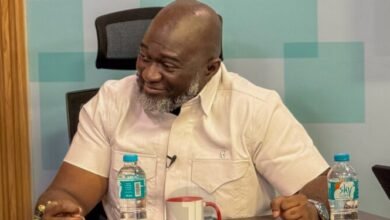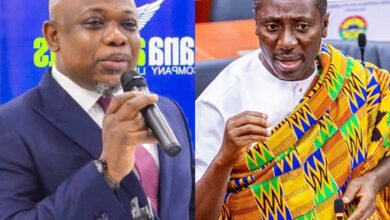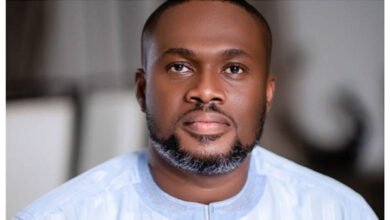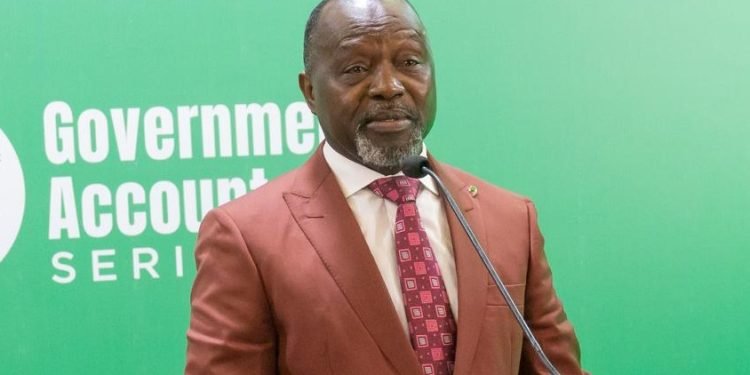
The Attorney-General and Minister for Justice, Dominic Ayine, is working with his United States counterparts to bring to book persons implicated in a bribery scheme linked to the 2014–2017 financing of a major power plant in Ghana.
The Deputy Attorney-General, Justice Srem Sai, disclosed this in a Facebook post on Saturday, August 8, following the conviction of Ghanaian-American businessman and former Goldman Sachs executive, Asante Kwaku Berko, by a United States federal jury in Brooklyn, New York.
Berko was convicted on charges of conspiracy to violate the United States Foreign Corrupt Practices Act (FCPA), violating the FCPA, and conspiracy to commit money laundering.
Justice Srem Sai said the Attorney-General was engaging US authorities as part of efforts to pursue other individuals implicated in the alleged bribery scheme.
The development follows a nine-day trial before Judge Diane Gujarati of the US District Court for the Eastern District of New York.
According to the US Department of Justice (DOJ), Berko, a dual US-Ghanaian citizen, played a central role in a scheme to facilitate the payment of more than US$1 million in bribes to Ghanaian government officials to secure approval for a multimillion-dollar power plant project.
Alleged bribery scheme
Prosecutors said Berko, who served as an Executive Director at Goldman Sachs, was tasked in 2014 with helping arrange a financing deal between a Turkish energy company and the Government of Ghana for the construction and financing of a power plant.
The project was being pursued at a time when Ghana was experiencing a severe electricity crisis.
Evidence presented during the trial showed that Berko and his co-conspirators allegedly planned to pay US$1 million to Ghana’s Minister of Power in April 2015.
The prosecution also alleged that five Ghanaian government officials each received US$5,000 during an all-expenses-paid trip to Turkey to inspect equipment for the proposed power plant.
The court further heard that Berko personally paid tens of thousands of dollars in additional bribes connected to the project.
Ghana’s Parliament approved the power plant agreement in July 2015. Prosecutors subsequently presented evidence of emails in which Berko and his alleged co-conspirators discussed the illicit payments.
Alleged efforts to conceal payments
The DOJ said Berko took steps to conceal the alleged bribery scheme from Goldman Sachs and other parties involved in the transaction.
According to prosecutors, shell companies, fraudulent invoices, nominee bank accounts and cash withdrawals were used to disguise the payments.
The department said the alleged illicit funds were moved through bank accounts in the United States and other countries, including accounts held in Berko’s name.
Goldman Sachs eventually withdrew from the transaction after corruption concerns emerged.
Conviction and possible sentence
Berko was convicted of conspiracy to violate the FCPA, violating the FCPA and conspiracy to commit money laundering.
He faces a maximum sentence of 30 years in prison when he is sentenced in November.
The criminal conviction follows previous civil enforcement action against him by the US Securities and Exchange Commission (SEC).
In June 2021, the SEC obtained a final judgment against Berko over the same bribery scheme. He was permanently barred from violating the anti-bribery provisions of the FCPA and ordered to disgorge US$275,000 in alleged illicit gains, in addition to more than US$54,000 in prejudgment interest.
Berko was extradited to the United States from the United Kingdom in July 2024 after being arrested in London in November 2022 under an Interpol Diffusion Notice.
US authorities condemn corruption
Assistant Attorney General Tysen Duva of the US Department of Justice’s Criminal Division said the conviction showed the consequences of corrupt practices that undermine fair competition.
“We live in a global economy that American companies must be able to compete in fairly. This defendant corrupted that fair competition. He abused his position at a world-renowned American investment bank by helping bribe Ghanaian officials, so he and his co-conspirators, including senior executives at a Turkish company, could make money.”
He added that individuals who undermine US interests through corruption “will face the full force of the Department of Justice.”
Acting Assistant Director of the FBI’s Criminal Division, Matthew Floyd, also criticised Berko’s conduct.
“Berko intentionally lied to his company to continue his scheme. The FBI will not tolerate dishonesty or corruption from anyone who wishes to disturb the business market.”
The case was prosecuted by the US Attorney’s Office for the Eastern District of New York and the Fraud Section of the Department of Justice’s Criminal Division.
The latest conviction has renewed scrutiny of the circumstances surrounding the power plant agreement and the alleged involvement of Ghanaian officials.
The Attorney-General’s engagement with US authorities could therefore pave the way for further investigations and possible prosecutions of individuals found to have participated in the alleged bribery scheme.