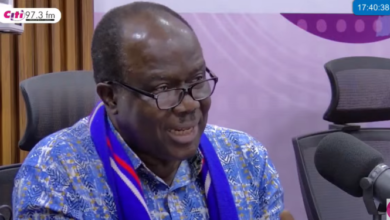
Policy analyst Bright Simons has questioned the reported GH¢5.11 billion profit recorded by the Ghana Cocoa Board (COCOBOD) in 2025, cautioning against drawing conclusions about the state-owned company’s financial health based solely on the headline figure.
In a lengthy post on X, Mr Simons raised several concerns about the figures contained in the recently released State Interests and Governance Authority (SIGA) report, including the absence of audited accounts, inconsistencies in reported figures and the treatment of foreign exchange gains.
He noted that both COCOBOD’s reported GH¢5.11 billion profit for 2025 and the GH¢5.73 billion loss recorded in 2024 are unaudited.
According to him, Ghana’s largest agribusiness has not produced audited financial statements for two consecutive years, with its latest audited accounts dating back to 2023.
“The fantastic 2025 performance in the SIGA report is just the word of management. Ghana’s largest agribusiness has not produced an audited set of accounts for two consecutive years. Its most recent audited year is 2023. For real,” he wrote.
Mr Simons also questioned the absence of cash flow statements for 2024 and 2025, saying this makes it difficult to establish how much of the reported profit represents actual cash generated by the company.
“Worse, Cocobod can’t seem to produce cashflow statements. Every rookie accountant knows that the hardest document to massage in an organisation’s accounts is the cashflow statement.”
He added: “So, we really don’t know how much of the GHS5.11 billion profit is mere paper gains and how much has ever actually passed through a real bank account somewhere.”
The policy analyst further pointed to discrepancies between successive SIGA reports. He said COCOBOD’s 2024 loss was recorded as GH¢4.057 billion in the 2024 report but revised to GH¢5.725 billion in the 2025 report.
He also noted that COCOBOD’s 2023 total equity was reported as GH¢2.069 billion in the 2024 report, but GH¢1.376 billion in the 2025 edition.
“I am being serious. Hundreds of millions of Cedis appear and disappear JUST LIKE THAT,” he said.
Mr Simons said the 2025 SIGA report also contains inconsistencies in its own presentation of COCOBOD’s historical performance.
He pointed out that the sector chapter records COCOBOD’s 2023 profit at GH¢2.286 billion, while the entity page puts the figure at GH¢2.211 billion. For 2022, the two sections reportedly record losses of GH¢3.835 billion and GH¢4.205 billion respectively.
“Three different published values exist for 2023, and three for 2022.”
He also questioned the reported cocoa purchase and sales volumes. According to him, COCOBOD purchased about 597,377 tonnes of cocoa in 2025, representing a 33% increase from roughly 449,000 tonnes in 2023/24.
However, he noted that the figure remained below the approximately 656,000 tonnes purchased in 2022/23.
“…the celebrated 2024/2025 number represents a 9% fall from the 2022/2023 number.”
Mr Simons further questioned the gap between cocoa produced, purchased and sold during the period.
He said the report indicates that COCOBOD purchased about 597,000 tonnes and sold 629,000 tonnes, against national production of approximately 670,000 tonnes.
“Does that mean that 73,000 tonnes of cocoa produced were stranded on the farms? Or smuggled out? (Not significant enough to reflect local processing needs.) Surely such a major matter requires explanation?”
The policy analyst also raised concerns about the treatment of foreign exchange in determining COCOBOD’s reported financial results.
He noted that operating revenue increased from GH¢15.80 billion to GH¢48.62 billion, while cocoa sales volumes rose by 36.7% and the weighted average selling price increased by 88.4%, from US$2,746 to US$5,174 per tonne.
However, he questioned COCOBOD’s use of an exchange rate of GH¢14.70 to US$1 in its 2024/25 accounts, noting that the rate represented the closing rate for 2024, while the cedi closed 2025 at about GH¢10.45.
He also pointed to another exchange rate of GH¢14.94 appearing elsewhere in the same SIGA chapter.
“The least Cocobod and SIGA could do was provide a note explaining the choice of the exchange rate.”
Mr Simons argued that the exchange-rate treatment may have had a substantial effect on the reported revenue and profit.
“The reported profit is GHS5.11 billion. Instead of a profit, the number becomes a loss. See the magic?”
He also questioned why SIGA’s reported net foreign exchange gain of GH¢235.68 million was not supported by detailed explanatory notes.
Another concern raised by Mr Simons was COCOBOD’s reported return on equity (RoE) of 345.07%.
He argued that the unusually high figure is largely influenced by the company’s relatively small equity base compared with its overall assets. COCOBOD reportedly ended 2025 with GH¢1.48 billion in equity against total assets of GH¢30.01 billion.
“Dividing GHS 5.11 billion of profit by a sliver of equity produces a spectacular percentage. But that fantastic number, in this case, is merely telling you that the institution is close to bankruptcy.”
He added: “To illustrate the absurdity, if Cocobod’s equity dropped close to zero, its RoE would now be almost infinite.”
Mr Simons also drew attention to COCOBOD’s liquidity and debt position, saying the organisation ended the year with GH¢1.11 billion in cash, GH¢28.52 billion in liabilities and GH¢12.30 billion in interest-bearing debt. He said COCOBOD was also owed GH¢9.15 billion by other parties.
“COCOBOD ends the year with GHS 1.11 billion of cash against GH¢28.52 billion of liabilities and GHS12.30 billion of interest-bearing debt, and with GHS9.15 billion owed to it by others. Its current ratio of 0.8 is hardly cause for celebration. See the magic?”
He said similar inconsistencies could be found in previous SIGA reports, citing cocoa purchase figures as an example.
According to him, the 2023 SIGA report recorded cocoa purchases of 850,000 tonnes for the 2022/23 financial year, while the 2024 report subsequently put the figure for the same period at 656,140 tonnes.
“That is a reduction of 193,860 tonnes, or 22.8%, without a crop-flow or restatement explanation.”
Mr Simons stressed that the discrepancies deserve attention, particularly because COCOBOD accounted for 85.4% of the overall revenue growth reported by SIGA for 2025.
1. A friend sent me news cuttings about Cocobod’s headline-grabbing GHS 5.1 billion return to profit on a GHS 48.6 billion revenue surge. The claims were attributed to the recently released, now controversial, SIGA report on state-owned businesses in Ghana.
2. There are many… pic.twitter.com/4hEADsx6Jo
— Bright Simons (@BBSimons) September 1, 2026
Despite his criticisms, he acknowledged a positive development in COCOBOD’s reported financial position, particularly the reduction in its interest-bearing debt.
“There was one silver lining, however (at least, if we take management’s word for it): interest-bearing debt at Cocobod fell, by GHS2.93 billion to GHS12.30 billion, and finance costs fell 35 per cent.”
Mr Simons concluded by urging policymakers and the public to look beyond the headline profit figure and scrutinise the underlying financial details.
“PR will do what PR must. But for POLICY, the Devil is always in the Detail, and accountability is a marathon.”
Source: Ghanaweb