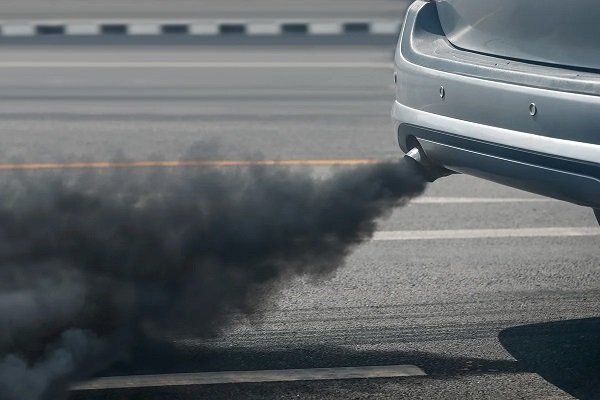
The Driver and Vehicle Licensing Authority (DVLA) is set to roll out a nationwide vehicle emission testing programme as part of Ghana’s broader efforts to combat air pollution, reduce greenhouse gas emissions, and advance the country’s climate change commitments.
The initiative forms part of Ghana’s environmental sustainability agenda, which is aligned with the objectives of the Paris Agreement and the National Climate Change Policy (NCCP) adopted in 2013 to promote a climate-resilient and low-carbon economy.
Under the new policy framework, all vehicles will be required to undergo emission testing before they can be registered or issued with roadworthy certificates.
The measure is aimed at ensuring that vehicles operating on Ghana’s roads meet prescribed environmental standards and do not contribute excessively to air pollution.
Authorities say the programme is a critical intervention in addressing the growing public health burden associated with poor air quality.
Recent international reports indicate that air pollution contributes significantly to premature deaths in Ghana, accounting for nearly 14 percent of all deaths nationwide.
According to available data, air pollution is now considered the second leading risk factor for death in the country after high blood pressure.
Health experts have linked vehicle emissions to a wide range of illnesses, including stroke, heart disease, lung cancer, Chronic Obstructive Pulmonary Disease (COPD), respiratory infections, and neonatal complications.
The transport sector remains a major contributor to air pollution, with Ghana’s vehicle population estimated at more than 3.2 million as of 2022.
Industry estimates suggest that more than 95 percent of these vehicles are older models that emit high levels of pollutants.
Under the new system, authorized testing centres will assess vehicle exhaust emissions to determine compliance with national standards.
Technicians will measure pollutants such as carbon monoxide, hydrocarbons, and nitrogen oxides through tailpipe testing, while newer vehicles may undergo On-Board Diagnostics (OBD) scans.
Vehicle owners will receive detailed reports indicating whether their vehicles meet the required standards.
Those whose vehicles fail the tests will be advised on corrective measures and given a period within which to undertake repairs and return for re-testing.
Commercial vehicle operators will be granted an extended transition period of up to two years to address emission-related defects before full enforcement takes effect.
The emission testing service will be delivered through a Public-Private Partnership (PPP) arrangement involving the DVLA and accredited private testing centres.
Motorists will pay a service fee of GH¢80 per test, while motorcycles and tricycles are expected to be incorporated into the programme at a later stage under a separate pricing structure.
Officials say the initiative is not intended as a revenue-generating levy but rather as a technical service designed to improve vehicle performance, reduce environmental pollution, and promote public health.
Beyond environmental protection, the programme is expected to generate valuable data on emissions from Ghana’s transport sector, strengthen regulatory oversight, support climate mitigation and adaptation strategies, and provide the country with the information needed to participate effectively in emerging carbon trading markets.
Authorities believe the project will play a key role in reducing the transport sector’s contribution to greenhouse gas emissions while helping Ghana meet its national and international climate obligations.
Source: classfmonline.com