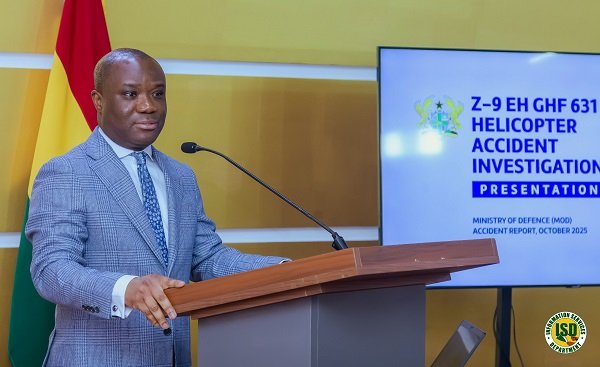
The Minister for Government Communications, Felix Kwakye Ofosu, has called on the media to adopt responsible security reporting practices, saying credible journalism is critical to preventing conflict and protecting Ghana’s national security.
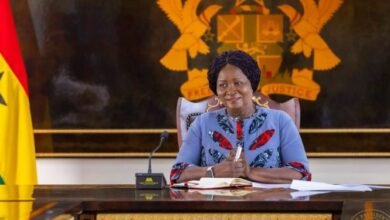
Representing the Minister at a capacity-building workshop on responsible security reporting for members of the Private Newspapers and Online News Publishers Association of Ghana (PRINPAG), Deputy Government Spokesperson Shamima Muslim said Ghana faces growing security threats from instability in the Sahel, misinformation and internal tensions.
She said these challenges make collaboration between the government, security agencies and the media increasingly important.
“Ghana sits in a neighbourhood on fire — coups to our north, jihadist spillover in the Sahel, internally latent triggers that could spill over if not checked and an information war that now moves faster than bullets,” Kwakye Ofosu said.
According to the Minister, Ghana’s media and political institutions have historically worked together to protect democracy, citing the media’s contribution to the return to constitutional rule, the passage of the Right to Information Act and national peace campaigns.
He, however, warned that growing credibility challenges facing the media could have implications for national security.
“Print is bleeding. And when print bleeds, national security bleeds,” he stated.
The Minister noted that social media platforms have increased the speed at which information spreads, but often without adequate verification or context.
“Social media gives us heat, not light. It tells us there is anger in Bawku, but not why. It shows a video of soldiers, but not whether it is from Ghana or Mali, 2025 or 2021,” he said.
He urged journalists to prioritise verification, context and accuracy when reporting security-related issues, particularly during periods of tension.
Kwakye Ofosu proposed that journalists ask four questions before publishing security alerts: whether the information has been verified with at least two independent sources, whether publication could endanger troops or victims, whether it could expose tactical information to extremists, and whether it could inflame ethnic or religious tensions.
“Let TikTok be first. Let PRINPAG be right,” he said, stressing that speed should not come at the expense of accuracy.
The Minister also called for stronger communication between the government, security institutions and the media, arguing that delays in providing verified information could create a vacuum for speculation and misinformation.
“Responsible security reporting is not the media’s burden alone. Government and the security institutions must communicate in a timely, credible and coordinated manner,” he said.
He further proposed the establishment of a secure verification channel linking PRINPAG, the National Security Secretariat and his office to facilitate rapid fact-checking during security incidents.
He also called for quarterly security briefings for editors, support for journalists’ safety and Right to Information training, as well as the development of a PRINPAG Code for Responsible Security Reporting.
Kwakye Ofosu said the media should see itself not merely as a source of news but as a strategic partner in preventive security.
“Print must not die. It must evolve, from newspaper to early warning partner,” he said.
He urged journalists to protect Ghana’s constitutional freedoms while ensuring that their work does not unnecessarily fuel fear, conflict or division.
“Our collective duty is clear: to communicate accurately, to act responsibly, to defend constitutional freedoms and to place the peace and security of Ghana above every competing interest,” he said.
Source: Ghanaweb